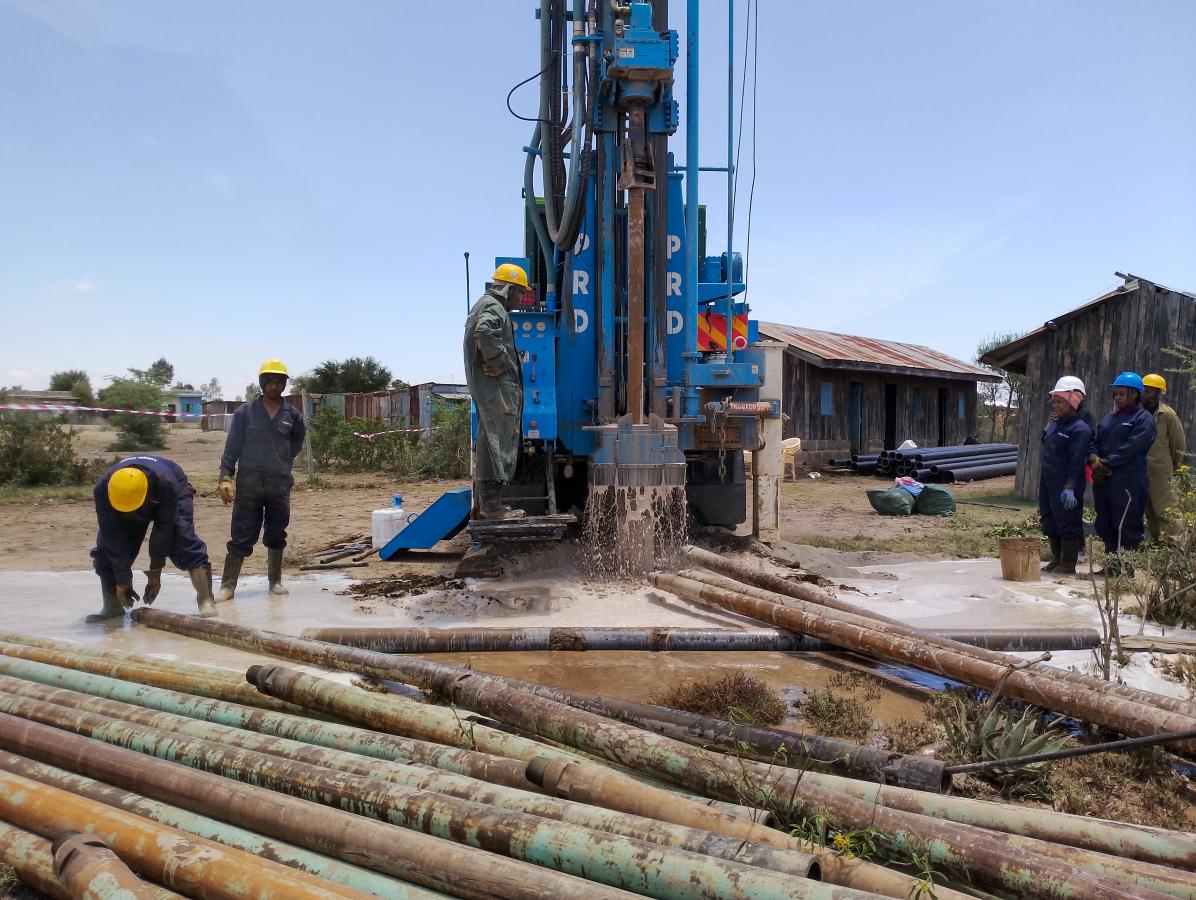
Hydrogeological surveys are an essential prerequisite for drilling successful boreholes and developing sustainable groundwater resources. In Kenya, the cost of these surveys can vary widely depending on several factors, including geographical location, the specific survey methods used, depth of exploration, logistics, and the expertise involved. These variations significantly influence budget planning for water supply projects, especially in regions with limited resources or complex geology.
This article explores the key elements contributing to cost differences in hydrogeological surveys across Kenya. It breaks down the major cost drivers, provides comparative insights by location, and offers recommendations for cost-effective groundwater exploration.
Understanding Hydrogeological Survey Components
A standard hydrogeological survey typically includes:
-
Desktop study (review of existing geological and hydrogeological data)
-
Field reconnaissance (ground truthing, topographic and land use assessment)
-
Geophysical surveys (commonly electrical resistivity)
-
Hydrogeological mapping (structural geology, drainage analysis)
-
Reporting and recommendations
Optional services like water quality testing, remote sensing, or GIS-based modeling can also be added based on project scope.
Each of these components incurs different costs depending on the depth, complexity, and location of the project.
Major Cost Determinants
1. Location and Accessibility
Remote or arid areas often incur higher costs due to:
-
Transportation logistics: Fuel, vehicle wear and tear, and accommodation
-
Security requirements: Especially in border counties or regions with wildlife threats
-
Lack of local service providers: Experts may need to travel from major towns
Example:
-
A survey in Nairobi or Kiambu may cost KES 70,000–100,000.
-
The same survey in Turkana, Mandera, or Tana River could exceed KES 150,000 due to extended travel and logistical support.
2. Survey Methodology Used
The choice of technology significantly impacts costs:
| Method | Description | Average Cost (KES) |
|---|---|---|
| VES (Vertical Electrical Sounding) | Single point resistivity | 10,000–20,000 per point |
| ERT (Electrical Resistivity Tomography) | 2D or 3D imaging | 80,000–200,000 per profile |
| Seismic refraction | Subsurface velocity mapping | 150,000–250,000 per site |
| Borehole logging | Conductivity, resistivity, and flow logs | 50,000–150,000 |
Higher resolution methods like ERT are more expensive but may be necessary in complex volcanic terrains or urban areas where simple VES may be inconclusive.
3. Depth of Investigation
The greater the target depth, the more sophisticated the equipment, and the higher the cost:
-
Surveys aiming at <100 meters may be straightforward and cheaper.
-
Deeper surveys (e.g., 200–300 meters) require more cable, higher-powered resistivity meters, and more time on-site.
4. Availability of Baseline Data
Regions with existing geological and hydrogeological data (e.g., from previous donor projects or government mapping) require less desktop work and modeling, reducing preparatory costs. In contrast, “data-scarce” counties often necessitate fresh mapping, adding to the workload and cost.
5. Human Resources and Expertise
Survey firms may employ:
-
Technicians (data collection)
-
Hydrogeologists (interpretation and reporting)
-
GIS experts (map generation)
Highly experienced professionals command higher fees but improve the quality and reliability of the results.
6. Permitting and Community Engagement
Surveys in public or communal lands may require:
-
Engagement with local leaders
-
Permits from water or land authorities
-
Community mobilization, sometimes with translators
These efforts add to time and cost but are crucial for smooth implementation, especially in counties like Narok or Samburu.
Cost Ranges by Region in Kenya
| Region | Typical Survey Cost (KES) | Notes |
|---|---|---|
| Nairobi, Kiambu, Machakos | 70,000 – 100,000 | Urban proximity reduces logistics costs |
| Kajiado, Nakuru, Nyandarua | 90,000 – 120,000 | Volcanic terrain may require detailed surveys |
| Kisumu, Kakamega, Bungoma | 100,000 – 130,000 | High rainfall may affect timing/logistics |
| Garissa, Wajir, Mandera | 130,000 – 180,000 | Arid, remote, with minimal road access |
| Turkana, Marsabit, Samburu | 150,000 – 200,000+ | High logistical costs; deeper aquifers |
| Coastal counties | 100,000 – 140,000 | Salinity concerns require advanced interpretation |
Note: These figures are indicative of professional survey costs for 1–2 sites and may vary with inflation, exchange rates, and firm pricing structures.
Examples of Survey Budgeting
Case 1: Community Water Project in Meru
-
Location: Near Mount Kenya
-
Method: VES at 3 points
-
Depth: 120 meters
-
Cost breakdown:
-
Desktop study & permits: KES 10,000
-
Field logistics: KES 15,000
-
VES survey: KES 45,000
-
Reporting & map generation: KES 10,000
-
Total: KES 80,000
-
Case 2: NGO Borehole Program in Turkana
-
Method: 1 VES and 1 ERT profile per site
-
Sites: 5 remote villages
-
Depth: 200–250 meters
-
Estimated cost per site: KES 180,000
-
Total budget: Over KES 900,000
Strategies to Optimize Costs
-
Cluster sites: Conduct surveys in multiple nearby sites to share logistics.
-
Use existing data: Leverage geological maps and prior reports where available.
-
Engage local professionals: Reduces accommodation and transport costs.
-
Use simpler methods where sufficient: ERT is not always necessary.
-
Partner with government programs: County governments or WRA may subsidize surveys under water access initiatives.
-
Use open-source tools: Free GIS and data processing software reduce overhead.
Importance of Cost-Benefit Analysis
Choosing the lowest-cost method is not always the most economical in the long run. A dry borehole due to poor site selection can cost millions in wasted drilling expenses. A slightly more expensive but accurate survey can lead to successful drilling and a long-term water supply.
Cost-benefit analysis must consider:
-
The critical need for water
-
The long-term sustainability of groundwater use
-
The risk of failure without proper surveys
Role of Regulatory Framework
The Water Resources Authority (WRA) mandates hydrogeological surveys as part of the borehole drilling permit process. This ensures:
-
Professional survey conducted
-
Use of approved methods
-
Submission of standardized reports
Counties with devolved water management responsibilities may also implement localized cost-sharing or subsidies to promote safe borehole development.
Conclusion
Hydrogeological survey costs in Kenya are influenced by a complex mix of location-specific challenges, methodological choices, and project scope. While initial survey costs may seem high—particularly in remote or arid regions, investing in comprehensive surveys is the most cost-effective way to ensure borehole success, safeguard communities, and manage groundwater resources sustainably.
Understanding these cost differences enables informed decision-making by governments, NGOs, private developers, and communities seeking to enhance water access through groundwater development.