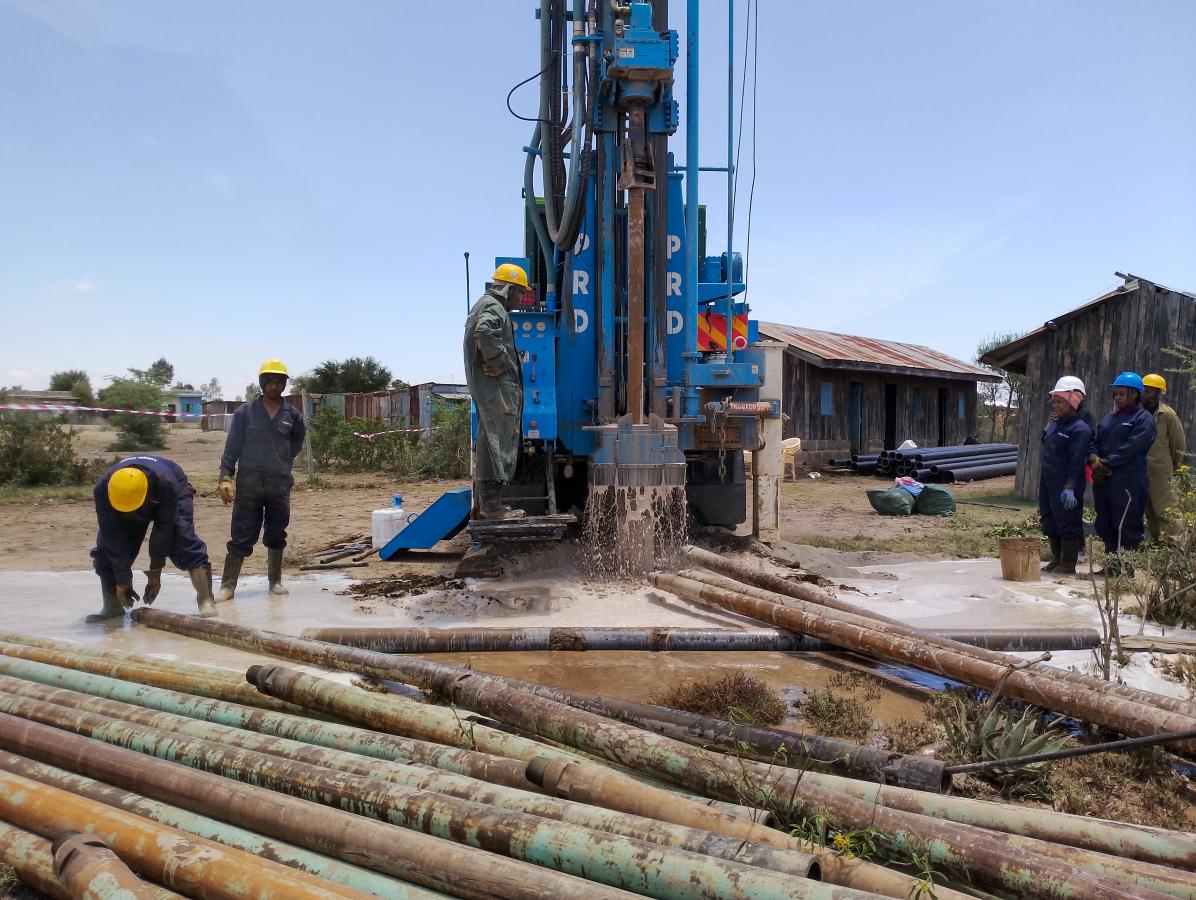
Aquifers are underground geological formations capable of storing and transmitting water. They are crucial for borehole drilling because they provide a sustainable source of groundwater. The type of aquifer encountered during drilling depends on the geological characteristics of the area. Here are the main types of aquifers commonly encountered in borehole drilling:
- Unconfined Aquifer:
- Description: An unconfined aquifer is an aquifer where the upper surface (water table) is open to the atmosphere and is not confined by an impermeable layer above.
- Characteristics: Water in unconfined aquifers is typically under atmospheric pressure, and the water table fluctuates with seasonal and climatic changes.
- Drilling Considerations: These aquifers are generally easier to access through drilling because they are closer to the surface and may require less depth to reach water.
- Confined Aquifer:
- Description: A confined aquifer, also known as an artesian aquifer, is sandwiched between impermeable layers of rock or clay that prevent water from easily entering or escaping.
- Characteristics: Water in confined aquifers is often under pressure due to the confinement and may flow upwards through a well without pumping (artesian flow).
- Drilling Considerations: Drilling into confined aquifers may require penetrating through overlying impermeable layers, and the pressure may influence well design and construction methods.
- Semi-Confined Aquifer:
- Description: A semi-confined aquifer is partially confined by layers that are permeable but have lower permeability than the aquifer itself.
- Characteristics: Water levels in semi-confined aquifers can fluctuate seasonally and may exhibit some artesian characteristics depending on the degree of confinement.
- Drilling Considerations: Similar to confined aquifers, drilling into semi-confined aquifers requires consideration of the permeability and hydraulic properties of surrounding layers.
- Perched Aquifer:
- Description: A perched aquifer is a localized zone of saturated material (usually sand or gravel) that lies above the main regional water table, separated by an impermeable layer.
- Characteristics: Perched aquifers are small-scale and often occur in hillsides or depressions where groundwater accumulates above impermeable layers.
- Drilling Considerations: Drilling into perched aquifers may require identifying their existence through geological surveys and drilling techniques suitable for shallow depths.
- Fractured Rock Aquifer:
- Description: In fractured rock aquifers, water is stored and flows primarily through fractures and joints in consolidated rock formations such as granite or basalt.
- Characteristics: The permeability of fractured rock aquifers depends on the density and connectivity of fractures, influencing water availability and well productivity.
- Drilling Considerations: Drilling in fractured rock aquifers requires specialized equipment and techniques to target fractures and maximize water yield.
- Karst Aquifer:
- Description: Karst aquifers form in soluble rock formations such as limestone, where groundwater flow is enhanced by dissolution of the rock.
- Characteristics: Karst aquifers may contain caves, sinkholes, and underground rivers due to the dissolution process, creating complex and interconnected flow paths.
- Drilling Considerations: Drilling in karst terrain requires careful assessment of geological features to avoid potential hazards such as collapse and contamination from surface sources.
Each type of aquifer presents unique challenges and opportunities for borehole drilling operations. Understanding the geological setting and hydrogeological characteristics is essential for successful well construction and sustainable groundwater management.